> For the complete documentation index, see [llms.txt](https://blog.h4vox.site/llms.txt). Markdown versions of documentation pages are available by appending `.md` to page URLs; this page is available as [Markdown](https://blog.h4vox.site/malware-techniques/the-art-of-malware-obfuscation-greater-than.md).
# The Art of Malware Obfuscation ;>
Everything is a weapon in the belly of the beast.
### **Introduction**
Welcome to this blog: **Payload Encryption** formally Obfuscation, the sneaky art that keeps modern malware alive way longer than it should.
Imagine you're a malware author dropping a nasty payload on someone's machine. If that payload sits there in plain sight – clear strings like "C2 server: evil.com" or raw API calls screaming "CreateRemoteThread" – antivirus signatures will eat it alive in seconds. So what do smart attackers do? They **encrypt the payload**. Not just wrap it in fancy packing, but actually scramble the malicious heart of the code so that static scanners see garbage, sandboxes get confused, and analysts have to work ten times harder.
Payload encryption isn't optional anymore – it's basically mandatory against anything modern (EDR, next-gen AV, cloud sandboxes). The encrypted blob looks random, behaves innocently until runtime, and only reveals its true face when the malware decides it's safe.
But here's the fun (and spooky) part: encryption is a double edged sword. Encrypt too much, and the file's **entropy** shoots through the roof → red flag everywhere. Encrypt too little, and signatures still catch you. Attackers live in this constant cat-and-mouse game, layering encryption with other tricks to stay one step ahead.
### **Why Encryption Feels So Spooky**
Think about it like this: the malware is literally wearing a mask. On disk it's just meaningless bytes. In memory? Still encrypted… until the exact moment it needs to wake up. That delayed reveal gives it time to check if it's in a VM, if the mouse is moving, if the clock looks fishy. Only then does it decrypt and unleash hell. It's like the payload is whispering: "Not yet… wait for it…"
And the best part (for them)? Most detection engines hate high-entropy data. So attackers sometimes **intentionally lower entropy** after encryption (more on that in future posts) to make the file look boring and normal.
### **The Multi-layered Approach to Obfuscation**
Today's malware doesn't just encrypt one thing – it obfuscates everything, layer by layer.
At the **code level**, they rename variables to nonsense, insert dead code that never runs, twist control flow into knots so even IDA Pro cries.
At the **binary level**, packing + encryption + virtualization turns the whole executable into something unrecognizable until runtime.
Over the **network**, they encrypt C2 traffic or mimic legitimate HTTPS so Wireshark sees nothing suspicious.
And at the **behavioral level**, they add sleep loops, environment checks, anti-sandbox tricks – basically anything to stay quiet until the coast is clear.
It's not one trick. It's a whole onion of evil layers. Peel one, and there's another underneath.
### **The Most Common Payload Encryption Tricks You'll See Everywhere**
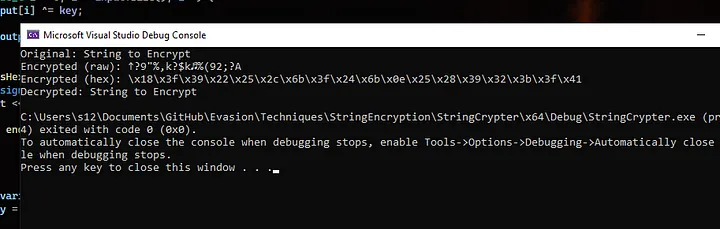
String Obfuscation Malware hates readable text. URLs, registry paths, API names – anything that gives away intent gets hidden. Simple Base64 is still super common because it's dead easy,
so it can be easily detectable (we not looking this deeply)...
String Obfuscation
but smart groups layer it with custom XOR or bit-shifting so it's not instantly reversible.
Base64 alone? Laughably weak now. Tools decode it in milliseconds. But combine it with XOR + custom junk? Suddenly it's annoying.
XOR Encryption The king of lazy-but-effective. XOR every byte with a **single key (or rolling key)** and boom – encrypted. Super fast, tiny code footprint, reversible with the same key. You see it in configs, C2 domains, even entire payloads in droppers. fact: because XOR is its own inverse, the decryption loop is literally the same code as encryption. Malware just runs it twice. (will discuss more later blogs..)
RC4 Slightly fancier stream cipher. Uses a key to shuffle a 256-byte S-box, then generates a keystream to XOR against the data. Still lightweight, longer keys possible, very popular in older RATs and banking trojans. Nowadays it's considered weak cryptographically, but for hiding payloads? Still does the job perfectly.
AES The pro league. Strong block cipher (128/192/256-bit keys) used when they actually care about real secrecy – ransomware encrypting files, APTs protecting implants, or loaders hiding the next-stage payload. Usually implemented via Windows CryptoAPI (CryptEncrypt) or embedded libs. High entropy, big tables (that famous S-box), lots of rounds. Once you spot AES constants in a binary, you know it's serious.
These three – **XOR**, **RC4**, **AES** – show up in almost every advanced sample right now. XOR for speed and simplicity, RC4 for a bit more strength without hassle, AES when they want something that actually resists brute-force or analysis.
We'll go super deep into each one in the next posts – code examples, how they look in disassembly, detection patterns, and the exact tools that break them.
### **Other well-known techniques**
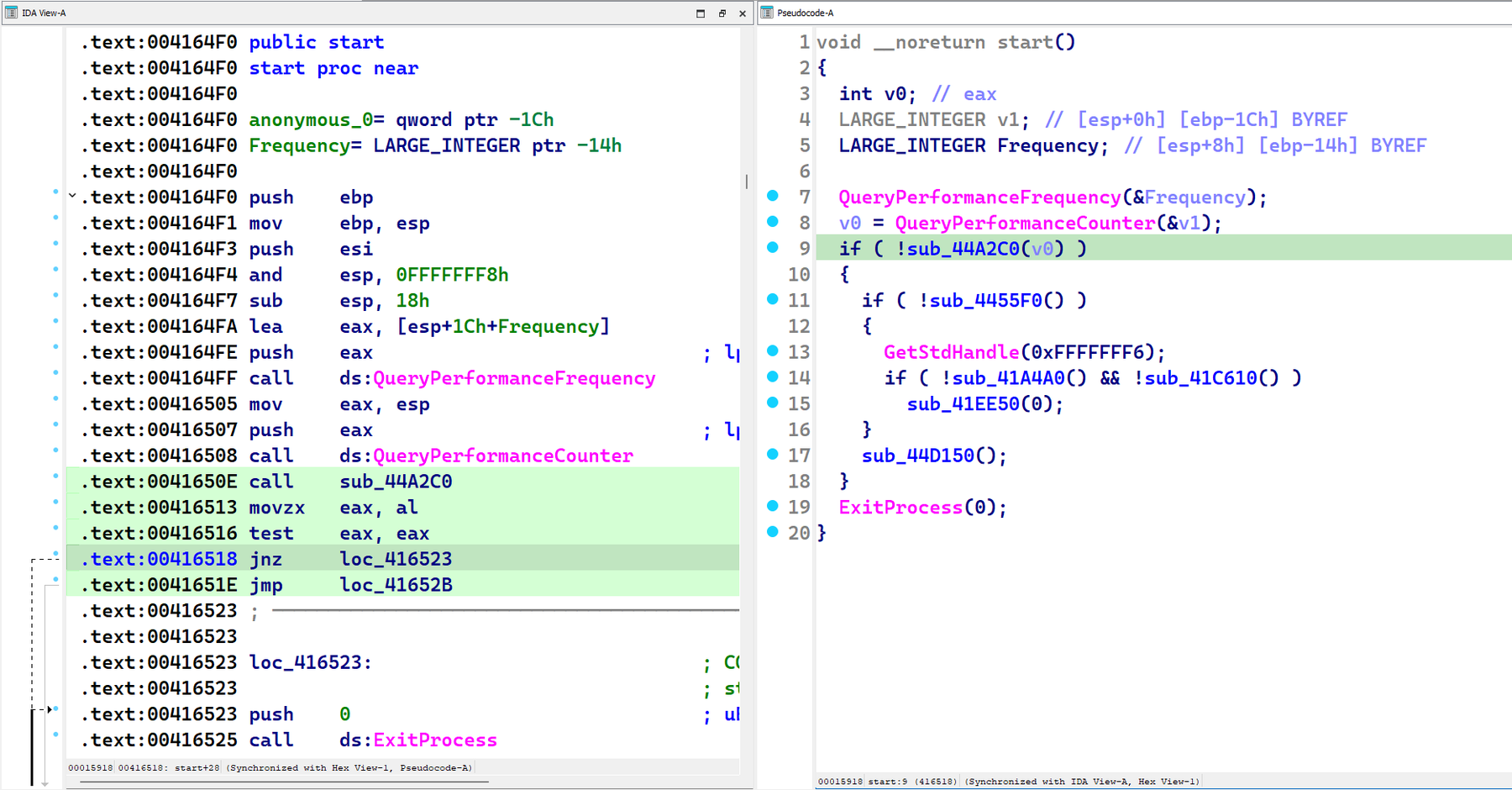
**Control Flow Obfuscation** This is where the logic itself gets twisted. They add fake branches called opaque predicates — conditions the malware knows are always true or always false, but you can’t tell just by looking. Or they flatten the entire program into one giant switch statement that jumps around like a drunk spider. Indirect jumps and calls replace normal function calls so you never know where it’s going next. The code still works perfectly, but trying to follow it statically feels impossible.
Control Flow Obfuscation
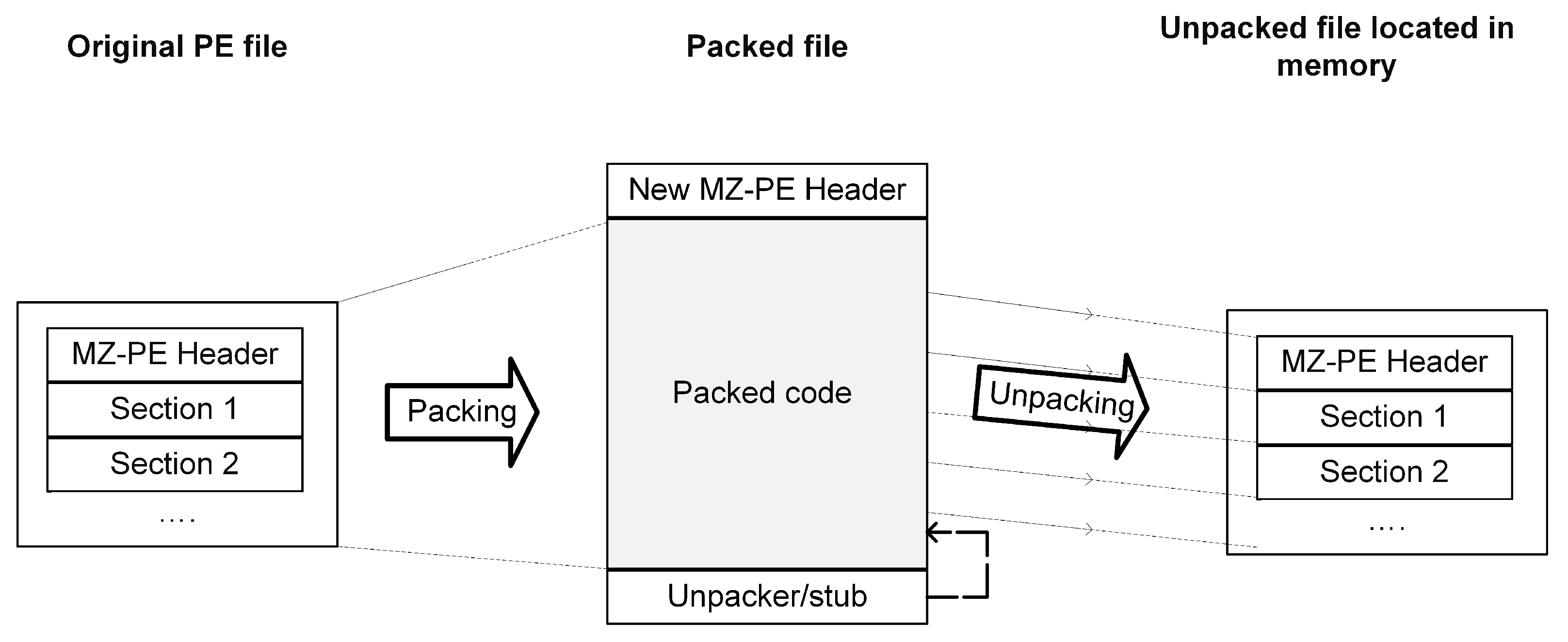
**Packing Techniques** Packing compresses and often encrypts the whole executable so the real code only appears at runtime. UPX is the classic lazy choice, but advanced groups use Themida, VMProtect, or custom packers. The moment the stub runs, it unpacks everything into memory and the real payload wakes up. This is why you see tiny files on disk that suddenly balloon to full size in memory.
Packing Malware Techniques
**Polymorphic Code** Every time this malware spreads, it rewrites its own decryptor with random junk instructions and different keys. The core payload stays the same, but the outer layer looks completely different every time. Signature-based detection dies instantly because no two samples match.
**Virtualization-Based Obfuscation** This is the boss level. The malware translates its real code into a custom virtual machine bytecode and ships its own tiny VM interpreter inside the binary. When you disassemble it you only see the VM loop and hundreds of weird opcodes. You have to understand the entire custom VM before you can even see what the malware actually does. APT groups love this one it turns weeks of analysis into months.
These techniques don’t fight each other they hold hands. You’ll see XOR or AES inside a packed binary that also uses control-flow flattening and polymorphic decryptors, all wrapped in behavioural anti-sandbox checks. It’s a perfect storm.
### **Final Thought**
Encryption and all these other techniques exist for one reason: to buy time. Every extra second the malware stays hidden is another second it can steal your data, encrypt your files, or phone home. But the good news? Once you learn to spot the patterns high entropy followed by sudden decryption in memory, weird control-flow graphs, custom VM loops you start seeing through the mask.
*The onion is big, but we’re peeling it together.*
Next blog: we go full on XOR encryption with real samples, C++ recreations, and the detection techniques...... : )
---
# Agent Instructions
This documentation is published with GitBook. GitBook is the documentation platform designed so that both humans and AI agents can read, navigate, and reason over technical content effectively. Learn more at gitbook.com.
## Querying This Documentation
If you need additional information that is not directly available in this page, you can query the documentation by asking a question.
Perform an HTTP GET request on the following URL with the `ask` and `goal` query parameters:
```
GET https://blog.h4vox.site/malware-techniques/the-art-of-malware-obfuscation-greater-than.md?ask=&goal=
```
`ask` is the immediate question: it should be specific, self-contained, and written in natural language.
`goal` is what the user is ultimately trying to achieve, the reason they need the answer. Sharing it helps GitBook give you a better, more relevant answer. A goal is most helpful when it describes the outcome the user wants rather than restating the question. For example, with `ask=how do I create an API token`, a goal like `automate deployments from our CI pipeline` lets GitBook tailor the answer to that use case.
The response will contain a direct answer to the question and relevant excerpts and sources from the documentation.
Use this mechanism when the answer is not explicitly present in the current page, you need clarification or additional context, or you want to retrieve related documentation sections.